News
Updates, research progress and events from the team.
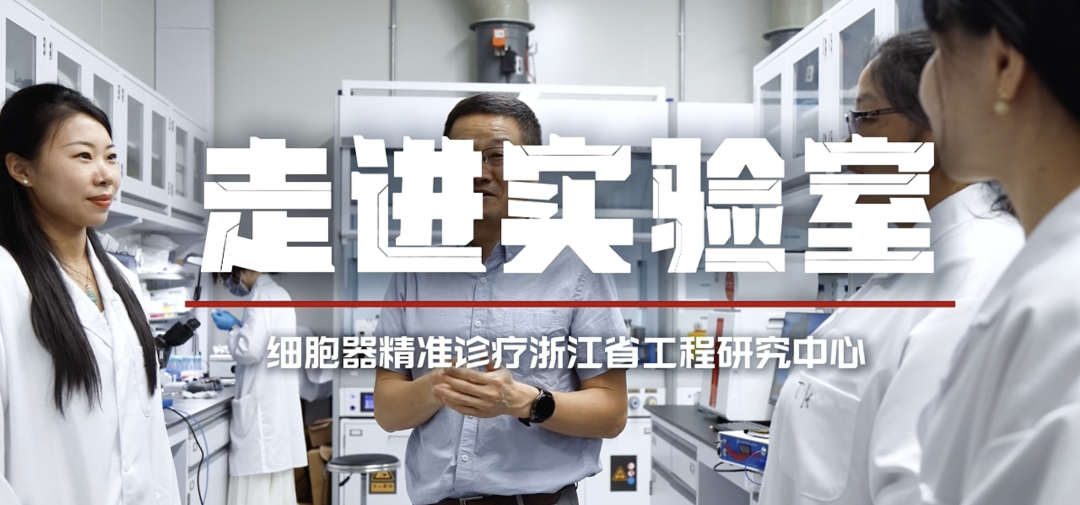
A Glimpse into an Academician’s Lab | Observing the Microscopic Through a Lens, Exploring the Profound with Intelligence
“如果一块表走时不准 你得打开后盖 查清是哪个齿轮出了故障” 生命健康领域的难题错综复杂,单一学科的力量难以触及根本,唯有跨学科“联合作战”,才能真正破解核心困境。 怀揣这份信念,2024年初,金大勇院士扎根宁波东方理工大学,牵头组建细胞器精准诊疗浙江省工程研究中心,带领一支60余人的跨学科团队,开启了精准医学领域的全新攻坚之路。 工程研究中心团队聚焦细胞器互作、外泌体诊断、药物精准递送等三大核心方向,全力突破技术瓶颈。他们致力于为细胞内部绘制高精度“谷歌街景图”,研发“智能分子”作为“纳米街景车”,结合深度学习技术实现15种细胞器同步成像,构建一个数字孪生细胞世界。 不仅如此,团队还以创新视角玩转微观“科研游戏”,“吹气球”让细胞内部细节清晰可辨,构建病灶“类器官”为药物筛选找“替身”,在纳米尺度上玩“俄罗斯方块“组装各种形状的智能机器人,为国际前沿的精准诊疗开辟多条“有趣”新路径。 时至今日,团队的科研成果已逐步落地:如通过“营养疗法“诱导黑色素瘤细胞“自杀”,快速鉴别细菌抗生素敏感性、以对抗“超级细菌”危机等,用硬核技术真正为人类健康保驾护航。 “让每个能做出贡献的人,都找到最适合自己的发光位置”,这是金大勇院士带领团队的理念。开放包容的氛围,汇聚优秀的人才,协同发力勇攀高峰。 以微纳之术为刃,以数智之力为翼,这群科研追光者,正在宁波东方理工的实验室里,解锁生命最精微的奥秘,奔赴守护人类健康的温暖约定。
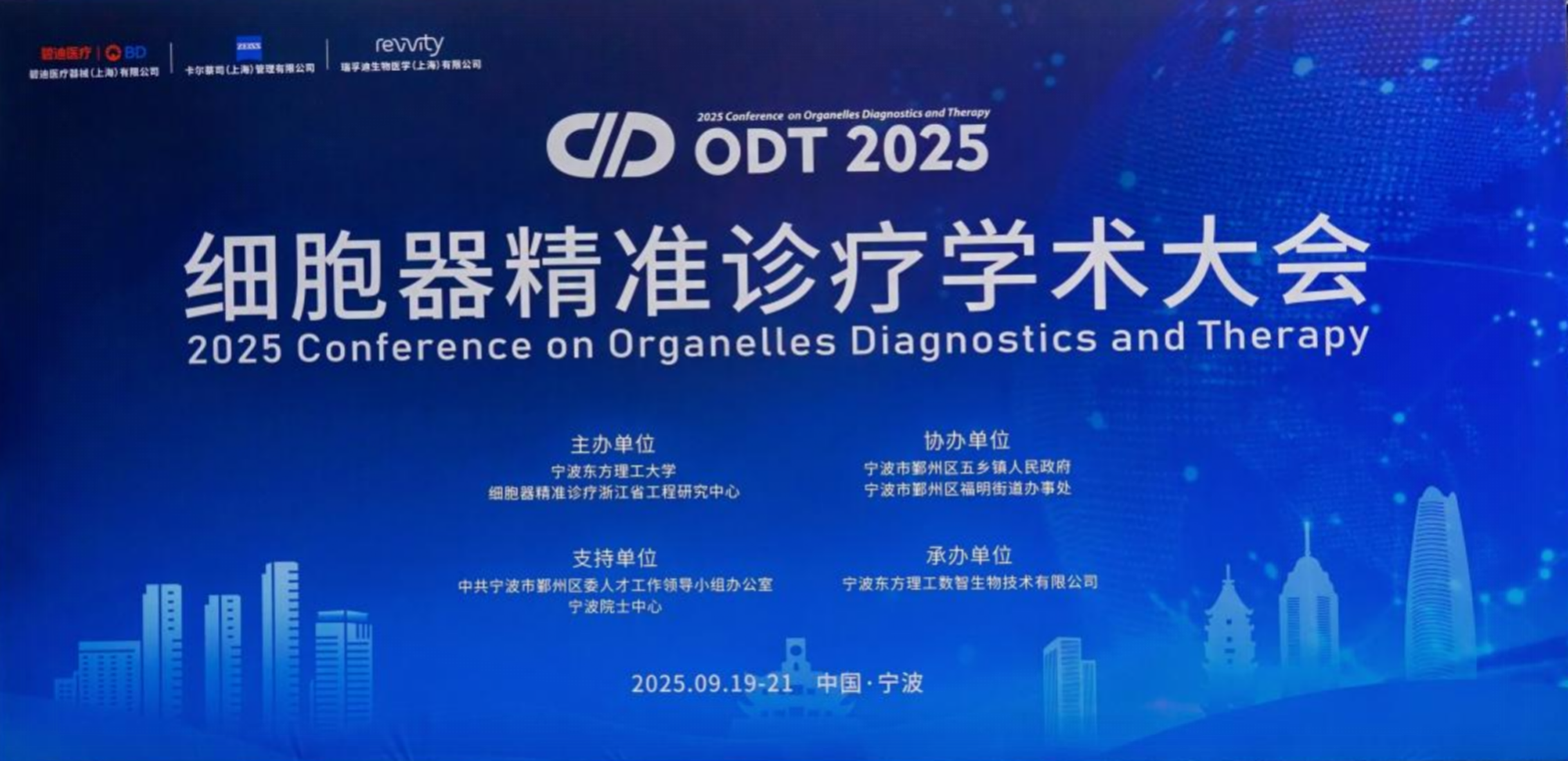
2025 Academic Conference on Organelle-targeted Precision Diagnosis and Therapy Concludes Successfully
On 20–21 September 2025, the 2025 Academic Conference on Organelle-targeted Precision Diagnosis and Therapy, hosted by Eastern Institute of Technology, Ningbo, and the Zhejiang Engineering Research Center for Organelle Precision Diagnosis and Therapy, was held at the Ningbo Academician Center. Under the theme "Decoding Organelles: Opportunities and Challenges from Basic Discovery to Precision Medicine", the conference focused on frontier topics including organelle imaging, organelle interactions, antimicrobial resistance, drug screening and organoid intelligence, with the aim of building a high-level platform for academic exchange and collaborative innovation that links basic science, technology, the clinic and industry. Nearly 200 experts, scholars and representatives from universities, research institutes, hospitals and companies across industry, academia, research, medicine and investment gathered to discuss trends in the field and key technical paths. The conference was co-organized by the People's Government of Wuxiang Town and the Fuming Subdistrict Office of Yinzhou District, Ningbo, with strong support from the Talent Work Leading Group Office of the CPC Yinzhou District Committee and the Ningbo Academician Center, and sponsorship from three strategic partners: ZEISS, BD and Revvity. The conference opened with Research Professor Shihui Wen of Eastern Institute of Technology, Ningbo, as host. Jian'en Chen, Vice Mayor of Yinzhou District, Ningbo, spoke first on behalf of the district government, congratulating the organizers and welcoming the experts. He stressed the importance Yinzhou attaches to high-level science and innovation platforms and to the biopharmaceutical industry, and pledged to keep improving policies and services to support high-level academic exchange and industry–university–research collaboration, providing strong support for frontier research in life and health and the translation of its results. Dayong Jin, Fellow of the Australian Academy of Technological Sciences and Engineering and Chair Professor at Eastern Institute of Technology, Ningbo, spoke on behalf of the conference presidium. He praised Yinzhou's strong innovation ecosystem and vitality and introduced the distinguished guests. He said the conference was designed to pool cross-disciplinary expertise around the key challenges of taking organelle research from theory to practice, and to build an open, integrated and mutually reinforcing platform for exchange. He hoped that two days of in-depth discussion would spark new ideas and new collaborations and jointly advance breakthroughs in precision diagnosis and therapy and their clinical translation. In the keynote session, Professor Wenbo Bu of Fudan University delivered a talk titled "Reflections and Suggestions on Research Paradigms in Nanobiomedicine". He invited the audience to reflect critically on today's largely materials-driven research. Although nanomaterials have made remarkable progress in functional design and efficient chemical reactions from a materials perspective, he noted, from a biomedical perspective such research has yet to resolve fundamental bottlenecks such as elucidating disease mechanisms and improving the efficiency of targeted therapy; it particularly lacks the discovery of new biological mechanisms and remains far from clinical use. Building on this critique, Professor Bu described his group's systematic exploration of a new paradigm integrating medicine, science and engineering: a first stage focused on chemodynamic therapy and the new concept of "reductive damage", and a second stage that turned to a "metabolic reactivation" strategy and introduced the concept of "a biochemical family of targets", offering an original theoretical framework for target discovery and drug development. Academician Dayong Jin then gave a keynote titled "Progress and Reflections on Organelle Precision Diagnosis and Therapy". Starting from the history of microscopy, he reviewed how cell observation has progressed from the microscopic to super-resolution and from qualitative to quantitative, and presented his team's series of breakthroughs in live-cell imaging, organelle functional analysis and precision measurement. He highlighted how advanced imaging tools can reveal the dynamic behavior of organelles in disease, and how these mechanistic insights drive new diagnostic strategies and innovative therapies, providing strong technical support for future clinical practice. In the Organelle Imaging session, experts including Junle Qu of Shenzhen University, Peng Xi of Peking University, Lele Li of the National Center for Nanoscience and Technology, Dong Li of Tsinghua University and Kun Xu of Carl Zeiss gave outstanding talks on super-resolution technologies and their applications, examining the key role of spatiotemporal organelle imaging in basic research, disease diagnosis and therapy and offering the audience a rich program on multidimensional organelle imaging. In the Organelle Interactions session, experts including Si Ming Man of the Australian National University, Hao Wang of the National Center for Nanoscience and Technology, Binbin Ding of Guangzhou National Laboratory, Yusong Guo of The Hong Kong University of Science and Technology, Zhangsen Zhou of the Shanghai Institute of Nutrition and Health, Chinese Academy of Sciences, and Jichuan Qiu of Shandong University discussed key questions in organelle interactions. Their wide-ranging exchanges offered new ideas and methods for studying the mechanisms of organelle interactions and will help advance research in the field in China and abroad. In the session on Antimicrobial Resistance, Drug Screening and Disease Mechanisms, experts including Jinyao Liu of Shanghai Jiao Tong University, Fan Bai of Peking University, Zhiyin Song of Huazhong University of Science and Technology, Chen Jiang of Fudan University, Xin Ding of Sun Yat-sen University, Xiaowei Chen of Peking University, Jintao Liu of Tsinghua University, Jianhua Guo of the University of Queensland, Kuangshi Chen of Peking University, Lizhuang Liu of the Shanghai Advanced Research Institute, Chinese Academy of Sciences, Dijin Xu of Westlake University and Jing Qian, a technical expert at BD, shared frontier work and technical innovations from multiple angles. On the fundamental side, they dissected a range of cutting-edge biological mechanisms, offering new perspectives on life processes. On the applied side, research on antimicrobial resistance is becoming more diverse and precise, and new platforms for delivering biological drugs will make disease treatment more precisely targeted. The session showed the strength of interdisciplinary work: by integrating materials science, artificial intelligence, molecular biology and other fields, it offered a rich set of methods for tackling complex biomedical problems. In the Organoid Intelligence session, experts including Xinhua Lin of Fudan University, Liqun Chen of Tianjin University, Majid E. Warkiani of the Suzhou Institute for Advanced Research, University of Science and Technology of China, Zhisen Shen of Ningbo Medical Center Lihuili Hospital, Le Zhang of the University of Technology Sydney, Lin Han of Shandong University, Shaohua Ma of Tsinghua University, Xiao Zhi of Shanghai Jiao Tong University and Yongyu Xu of Revvity presented the latest advances in organoid research, which is becoming an important vehicle for drug discovery and personalized medicine. A closed loop from basic research to clinical application and translation has largely taken shape, supporting the high-quality development of precision medicine and biosafety. The parallel Forum on the Industrial Application and Development of Organelle Technologies built a bridge between industry, academia, research, medicine and investment. Tian Xia, Executive Dean of the Yinzhou (EIT) Digital Intelligence Bio-Innovation Institute, chaired the forum, which brought together well-known investors, industry experts and project founders. Jie Wu, Deputy General Manager of Shanghai Science and Technology Venture Capital Co., Ltd., gave a talk titled "Demand-Driven Translation, Innovation and Entrepreneurship in Biomedicine". Lively discussions covered the industrialization of organelle and biophotonics technologies, and five industry projects delivered pitches that showcased the innovation and commercial potential of organelle precision diagnosis and therapy. Kai Mao of the Development and Cooperation Department of the Yongjiang Science and Innovation Zone Office presented the zone's investment environment and policies, offering strong support for attracting projects and promoting industrial development. The successful 2025 Academic Conference on Organelle-targeted Precision Diagnosis and Therapy provided a platform for in-depth exchange and collaboration among researchers and practitioners in the field, reflecting the shared hope of the academic community to move basic research toward clinical application and promoting close integration of academia and industry. Participants agreed that organelle precision diagnosis and therapy, as an emerging interdisciplinary field, has broad prospects. With continued technological progress and innovation, it is expected to deliver more breakthroughs in disease prevention, diagnosis and treatment, and drug development, making greater contributions to human health. The hosts, including Eastern Institute of Technology, Ningbo, and the Zhejiang Engineering Research Center for Organelle Precision Diagnosis and Therapy, said they will continue to advance the field and hold more high-quality academic events. Guided by biomedical needs and supported by the deep integration of medicine and engineering, they aim to open new paths for biomedical innovation and help usher in the era of organelle precision diagnosis and therapy.
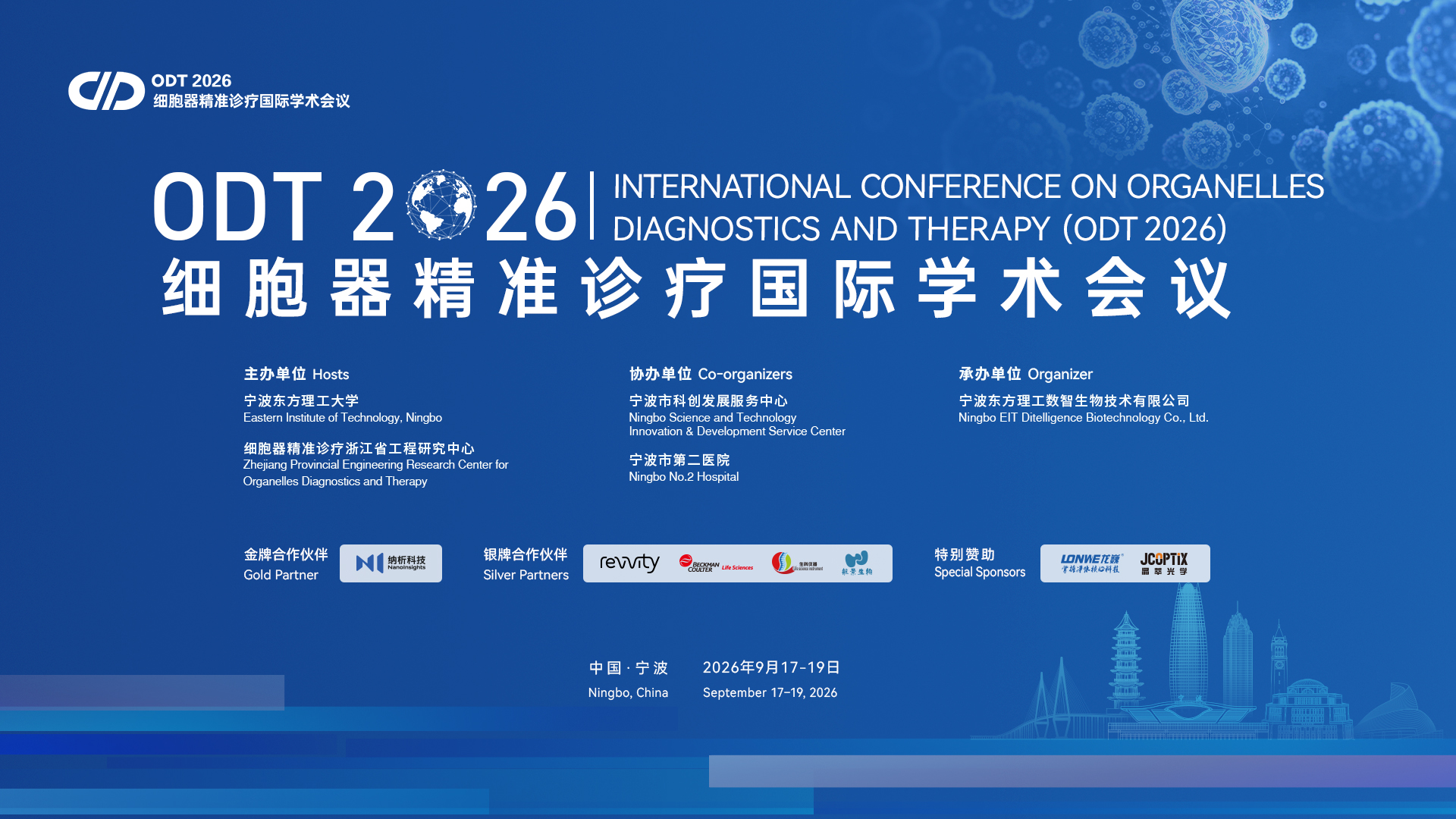
ODT 2026 International Conference on Organelle-targeted Precision Diagnosis and Therapy Held Successfully
ODT 2026 Unlocking the Micro-Engines of Life: EIT Hosts the ODT 2026 International Conference on Organelle-targeted Precision Diagnosis and Therapy 17–19 September 2026, Eastern Institute of Technology, Ningbo Organelles are the micro-engines that keep life running, and they hold the key to decoding difficult diseases and achieving precision diagnosis and therapy. As precision medicine advances, medical research is moving beyond tissues and cells down to the level of organelles. Whether we can precisely read the functional state of organelles and target them for regulation and intervention bears directly on breakthroughs in diagnosing and treating major diseases such as cancer, metabolic disorders and neurodegeneration. It is one of the most cutting-edge and challenging scientific questions in biomedicine today. On 18–19 September, the ODT 2026 International Conference on Organelle-targeted Precision Diagnosis and Therapy was held at Eastern Institute of Technology, Ningbo (EIT). Under the theme "Focusing on Organelle Therapy, Opening a New Frontier in Precision Medicine", the conference featured a main forum, an AI Virtual Cell Forum and a Young Scientists Forum. More than 200 experts and scholars from eight countries gathered on the banks of the Yongjiang River for in-depth discussions on frontier topics including organelle functional imaging and regulation, antimicrobial susceptibility testing and therapy, organoid modeling and intelligent analysis, and spatial multi-omics and its applications. At the opening ceremony, Dongxiao Zhang, Executive Vice President of EIT and member of the US National Academy of Engineering, delivered a welcome address. He noted that EIT, a new research university that is ambitious, small and focused, innovative and international, has made life and health and the integration of medicine and engineering one of its key strategic priorities, attracting high-level talent from China and abroad and establishing a number of high-level research platforms. Going forward, the university will continue to build an open, integrated platform for international exchange, advance breakthroughs in precision diagnosis and therapy and their translation, and work with partners to explore new paths from frontier discoveries to clinical application. Conference Chair Dayong Jin, Chair Professor at EIT and Fellow of the Australian Academy of Technological Sciences and Engineering, said that the Zhejiang Engineering Research Center for Organelle Precision Diagnosis and Therapy has always aimed for world-class standards. Deeply integrating biomedicine, engineering and information science, it has made sustained progress in key areas such as organelle function regulation and nanomedicine delivery, producing a series of landmark original results. Guided by real clinical needs, the center works with more than ten leading medical institutions in China to advance medicine–engineering collaboration and multicenter clinical validation. He hoped the conference would serve as a bridge to deeper collaboration with teams in China and abroad to open a new future for precision medicine. The Zhejiang Engineering Research Center for Organelle Precision Diagnosis and Therapy, led by Eastern Institute of Technology, Ningbo, was approved by the Zhejiang Provincial Development and Reform Commission in 2024, with Dayong Jin as its director. At the main forum, international experts including Professor Thomas Simmen of the University of Alberta, Canada, Professor Sebastian Hiller of the University of Basel, Switzerland, Professor Shigeru Yanagi of Gakushuin University, Japan, Stefan Schild of Austria, Felipe Cava of Sweden and Daniel López of Spain shared their latest findings on mitochondrial regulation and replacement therapy, organelle homeostasis and cell death mechanisms, bacterial membrane microdomains and extracellular vesicles. Conference Co-Chair Xing-Jie Liang, Member of the Academia Europaea, presented new advances in using nanoparticles to regulate the lysosome–mitochondria interactome. Scholars including Associate Professor Liang Ge of Tsinghua University, Professor Junjie Hu of the Institute of Biophysics, Chinese Academy of Sciences, Professor Da Jia of Sichuan University, Professor Yang Tian of East China Normal University, Professor Boxun Lu of Fudan University, Professor Jiangli Fan of Dalian University of Technology, Research Professor Cunqi Ye of Zhejiang University, Professor Jiaming Chen of Zhejiang University and Professor Dan Ye of Fudan University presented systematic interdisciplinary breakthroughs in unconventional secretion, super-resolution imaging probes, mechanisms of neurodegenerative disease and immunometabolism. The conference also hosted the AI Virtual Cell Forum and the Young Scientists Forum. The AI Virtual Cell Forum covered the development of virtual cells, dynamic virtual cell agents, deep-learning-enhanced mitochondrial imaging and multimodal data acquisition from organoids, and included project pitches and a roundtable on industry investment. Industry representatives also discussed how advanced instruments, including platforms for high-spatiotemporal-resolution super-resolution microscopy, mitochondrial vesicle characterization and high-content cell painting, are being applied in basic research and drug screening. At the Young Scientists Forum, more than ten young scientists shared their latest breakthroughs in frontier interdisciplinary areas, including nanoprobes and bioimaging, precision cancer diagnosis and therapy, targeted drug delivery, in vivo peptide self-assembly, neural electrical stimulation, micro- and nanomanipulation robots, extracellular vesicles and engineered living biotherapeutics, and the regulation of development by ancient retroviruses. Participants agreed that the conference further connected the full chain from basic research and technology development to clinical application and industry investment, building a high-level international platform for collaboration in the emerging interdisciplinary field of organelle biology. Going forward, EIT will continue to draw on high-level platforms such as the Zhejiang Engineering Research Center for Organelle Precision Diagnosis and Therapy to bring together global innovation resources, speed the translation of frontier results, and contribute to the advance of precision medicine and the upgrading of the life and health industry. The conference was co-hosted by Eastern Institute of Technology, Ningbo, and the Zhejiang Engineering Research Center for Organelle Precision Diagnosis and Therapy, co-organized by the Ningbo Science and Technology Innovation Development Service Center and Ningbo No. 2 Hospital, and organized by Ningbo EIT Digital Intelligence Biotechnology Co., Ltd. Leaders attending the conference included Jianjun Zheng, Party Secretary, and Boding Wang, President, of Ningbo No. 2 Hospital; Honghua Ye, President of Ningbo Medical Center Lihuili Hospital; Hongfei Weng, Party Secretary, Jiawei Zhou, Executive President, and Quanyong Yi, Vice President, of Ningbo Eye Hospital; and Tao Li, Party Secretary of Ningbo No. 6 Hospital. Representatives of the First Affiliated Hospital of Ningbo University and Ningbo Hospital of Integrated Traditional Chinese and Western Medicine also attended, exploring new ideas for medicine–engineering integration and clinical translation of frontier diagnostic and therapeutic technologies.